
Chiropractic Sports Medicine
The sports and activities that keep us healthy can occasionally lead to injury. It’s vital that we take symptoms seriously and address the issues quickly, so that we don’t exacerbate a problem beyond simple repair. At Optimize Chiropractic, our doctors specialize in chiropractic care for sports-related injuries. Our team provides individualized evaluation and care to support a safe, gradual return to the sports and activities you enjoy.
Get back on the field
Common Sports Injuries
Click on one of the blue hotspots to learn more.
Concussion
If you play contact sports you may have already experienced a concussion at some point in your athletic career. A concussion is a traumatic brain injury that can temporarily affect your mental state and level of consciousness. There is no “cure” for a concussion. Your body just needs to rest in order to recover. A suspected concussion requires prompt evaluation by an appropriate medical professional. After medical clearance, we can evaluate related musculoskeletal concerns such as neck discomfort; chiropractic care does not treat the brain injury itself.
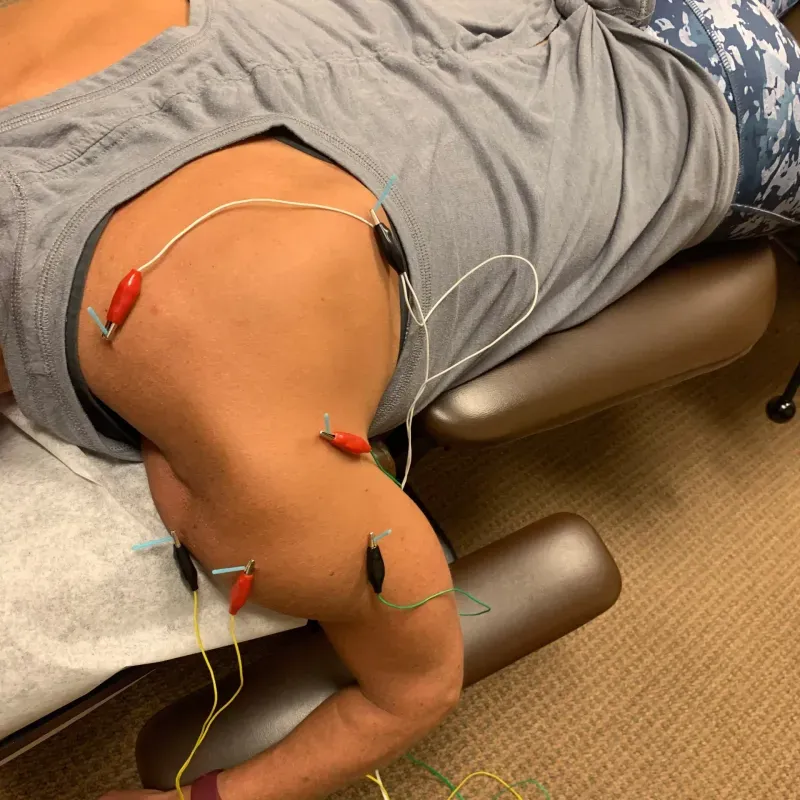
Shoulder Pain
The shoulder is a ball-and-socket joint that’s connected to the body through muscle. So the underlying causes of shoulder pain most frequently have to do with either the joint itself, or the muscles, tendons and ligaments that support the joint. Because of the range of motion required for effective play, football players, baseball and softball players, and swimmers tend to get shoulder pain at some point in their athletic careers. Optimize Chiropractic can help athletes maintain or enhance their range of motion, so they can perform at their best.
Tennis Elbow
Tennis elbow is irritation or inflammation of the connective tissues between the forearm and the elbow. A variation of tennis elbow is golfer’s elbow, which oppositely effects the inside portion of the elbow. These conditions develop through the repetitive motion of certain sports, but can also effect non-athletes whose occupations involve simply holding things with a tight grip for long periods of time.
Hip Flexor Strain
A sharp pain in the hip is a tell-tale sign of a hip flexor strain. This pain, along with decreased or limited range of motion, and tenderness, swelling, or bruising near the groin, are also indicative of the issue. During running, biking or repetitive leg exercises, the hips may swing forward in overextension. This can cause that sharp pain in the front of the hip.
Patellar Tendonitis
Patellar tendinitis is an injury to the tendon connecting your kneecap (patella) to your shinbone. The patellar tendon works with the muscles at the front of your thigh to extend your knee so that you can kick, run and jump. Pain is the first symptom of patellar tendinitis, usually between your kneecap and where the tendon attaches to your shinbone (tibia).
Shin Splints
When we put stress on our shins, as we do during running or exercise, the connective tissues that attach our leg muscles to our tibia can get inflamed. Shin pain can come from several overuse injuries. Because a stress injury requires different management, persistent or worsening pain should be evaluated by an appropriate healthcare professional.
Hamstring Strain
Hamstring strains, or a pulled hamstring, are common leg injuries that can range from mild to severe. Mild hamstring strains will likely feel like a dull ache at the back of the leg, while severe strains or tears to the hamstring muscle are extremely painful and can prohibit the patient from standing or walking.
Ankle Sprain
Rolling, twisting, or turning the ankle in an awkward way can often result in a sprained ankle. The most common way that patients sprain their ankles is when the foot inverts, or turns inward, and then the ankle externally rotates, or turns outward. This opposing movement of the foot and ankle cause stretching or tearing in the tissues and ligaments that hold the ankle bones together. Ankle sprains vary in severity, and significant swelling, inability to bear weight, deformity, or persistent pain warrants prompt medical evaluation. But it’s important for athletes to be aware of the symptoms of sprained ankles, what types of movements cause them, and what to do if they experience a sprain.

Feel the difference
Benefits of Chiropractic Care

Pain relief
Getting out of pain is every injured patients first priority. Your chiropractor can help alleviate pain and get you on a path to recovery.

Enhanced Performance
Chiropractic care not only alleviates the pain from an injury, it can help you heal more soundly and enhance your overall performance.

Enhanced quality of life
Enhance your quality of life by getting out of the pain and discomfort that keeps you from doing your everyday.
Feel the difference
Benefits of chiropractic care and athletes
Patient-Centered Care in Longview
Our goal is simple: Get you out of pain fast, and return you back to your field of competition as soon as possible. Pain relief aside, here are some of the athletic benefits a certified chiropractic sports physician can offer:
Improved performance. Mobility restrictions and musculoskeletal discomfort can affect how an athlete trains and moves. An individualized care plan may support mobility and comfort as one part of an athlete’s overall training and recovery program. Research on chiropractic care and athletic performance is mixed, so we do not promise performance gains. Care recommendations are based on each athlete’s exam, symptoms, goals, and health history. Examples of athletes who can benefit include:
- Football players: Professional and recreational athletes may choose chiropractic care for musculoskeletal evaluation, mobility, and comfort.
- Baseball players: Baseball and softball players may seek care for mobility, overuse concerns, and return-to-play support.
- Basketball players: Basketball players may seek care for mobility, joint or muscle discomfort, and individualized recovery planning.
More effective training. Many athletes also find that chiropractic care helps them train more effectively. Runners with joint concerns benefit from an individualized assessment and a gradual, symptom-guided return-to-training plan. We work alongside other qualified healthcare and training professionals when coordinated care is appropriate.
Fewer injuries. Alignment issues cause unnecessary stress on the body and can often lead to injury. A sports-focused chiropractic evaluation can identify mobility and musculoskeletal concerns that may inform an athlete’s broader injury-risk plan. For example, chiropractors help golfers correct postural imbalances in their swing that could lead to injury.
Reduced recovery times. Recovery time depends on the injury, the individual, and the full care plan; we do not promise accelerated healing. We use exam findings and the athlete’s response to care to guide safe progression. That’s why so many athletes—from professional sports teams to high school players—regularly see a chiropractor to stay in top shape.
- General Primary Care Physicians (MD)
- Orthopedic Specialists
- Physical Therapists
- Obstetricians
- Midwives
- Podiatrist
- Pediatricians
- Optometrist
- Naturopathic Doctors
- Acupuncturists
- Massage Therapists
- Personal Trainers