
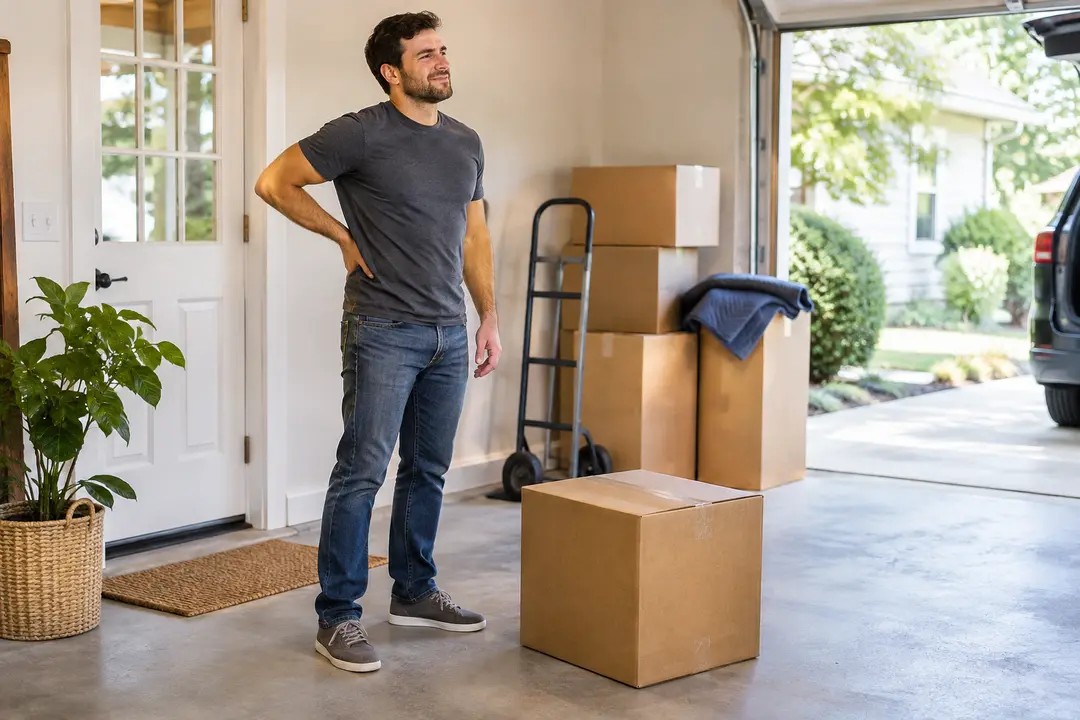
You bend to move a box, lift a bag of soil, pick up a child, or finish a demanding shift—and suddenly your back tightens or hurts. Back pain after lifting is common, but the right next step depends on more than how heavy the object was.
Some lifting-related episodes involve temporary irritation of muscles, ligaments, or joints. Others include pain that travels into a leg, numbness, weakness, or warning signs that require prompt medical care. The sensation alone cannot tell you exactly which structure is involved, and trying to diagnose a “pulled muscle” or “slipped disc” at home can be misleading.
Here is a practical guide for Longview and East Texas residents who hurt their backs while lifting.
Why can lifting trigger lower-back pain?
Lifting places demand on the muscles, joints, discs, and connective tissues that help support the spine. The load is only one part of the equation. Risk can also change based on:
- How far the object is from your body
- Whether you bend or twist during the lift
- How often you repeat the task
- Whether the load is awkward or shifts unexpectedly
- The height where the lift starts and ends
- Fatigue, previous injury, sleep, and current physical capacity
That is why a load that feels manageable one day may cause discomfort in a different situation. The National Institute for Occupational Safety and Health uses a lifting equation that considers several of these factors rather than relying on one universal “safe weight.”
What should you do immediately after hurting your back?
If there was no major trauma and you do not have any warning signs, these general steps may be reasonable while you monitor the symptoms.
Stop the task and get to a comfortable position
Do not keep repeating the movement to test whether the pain is still there. Set the object down safely, ask for help, and avoid another heavy lift in the moment.
Keep gentle movement in your day
Complete bed rest is usually not the best response to uncomplicated acute back pain. Short walks and ordinary movement within a comfortable range may help prevent additional stiffness. The goal is not to push through severe pain; it is to avoid becoming completely inactive when movement is safe.
Temporarily reduce heavy lifting and twisting
Modify the aggravating activity while symptoms are irritable. Break a job into smaller pieces, use a cart or dolly, or ask another person to help. Gradually rebuild activity rather than jumping directly back to the same load.
Use heat or cold for comfort if appropriate
Some people prefer a wrapped cold pack soon after an aggravation, while others find superficial heat more comfortable. Protect the skin, follow the product directions, and use whichever option feels better. Neither approach replaces an evaluation when symptoms are severe, progressive, or accompanied by warning signs.
Write down what happened
Note the weight and position of the object, whether you twisted or felt a pop, where the pain travels, and which movements make it better or worse. Also record any numbness, tingling, weakness, balance changes, or bladder and bowel symptoms. This information can make an examination more useful.
Is it a muscle strain or a disc problem?
It is understandable to want a quick label, but symptoms can overlap. Localized aching, tightness, and pain with movement may occur with a strain, joint irritation, or several other mechanical problems. Pain traveling into a leg, tingling, numbness, or weakness can suggest nerve involvement, but even those symptoms do not identify the exact cause by themselves.
An examination may include questions about how the lift happened, movement testing, strength and reflex checks, and a neurologic screen when indicated. Imaging is not automatically required for every new episode of back pain. A clinician may recommend it when the history, examination, trauma, or warning signs suggest that the result could change treatment or referral decisions.
When should back pain after lifting be evaluated?
Consider scheduling an examination when the pain:
- Is not gradually improving
- Keeps returning with work, exercise, or normal household tasks
- Makes it difficult to stand, walk, sleep, or complete daily activities
- Travels into the buttock or leg
- Comes with new tingling, numbness, or weakness
- Began with a fall, collision, or significant impact
- Feels substantially different from a previous episode
- Prevents you from returning to work or activity safely
You do not need to wait until the pain becomes unbearable. An evaluation can help clarify which movements are currently limited, screen for reasons to refer, and create a reasonable return-to-activity plan.
Back-pain warning signs that need urgent medical care
Seek urgent medical attention for back pain with:
- New loss of bladder or bowel control
- New numbness around the groin, genitals, buttocks, or “saddle” area
- Rapidly worsening leg weakness or difficulty walking
- Pain after a serious fall, collision, or other major trauma
- Fever, chills, or feeling acutely unwell
- A history of cancer with new or unusual back pain
- Severe pain that is rapidly worsening or cannot be made comfortable
Call 911 for a medical emergency. Do not wait for a routine chiropractic appointment when these symptoms are present.
What can a chiropractic evaluation include?
A responsible chiropractic visit starts with an assessment—not an automatic adjustment or a promise that one treatment will fix every lifting injury.
At Optimize Chiropractic, the clinical team can review how the episode began, whether symptoms remain in the back or travel, what movements are limited, and whether the findings indicate a need for medical referral. The examination may include movement, strength, reflex, sensation, and orthopedic testing as appropriate.
When conservative chiropractic care is suitable, an individualized plan may include manipulation or mobilization, exercise, soft-tissue care, and guidance for returning to work, lifting, or training. Evidence suggests spinal manipulation may offer modest benefit for some people with acute low-back pain, but it is one option—not a guarantee and not the right choice for every presentation.
The aim is to help you understand the problem, regain useful movement, and return to activity at a pace that fits your findings.
How can you reduce lifting risk next time?
No technique can eliminate every injury, but better task design can reduce unnecessary strain.
- Plan the path and destination before lifting.
- Use a cart, dolly, or lifting device when available.
- Ask for help with a heavy, bulky, unstable, or hard-to-grip object.
- Keep the load close to your body when practical.
- Turn with your feet instead of twisting your torso under load.
- Reduce the weight by dividing a large load into smaller pieces.
- Avoid rushed or jerky lifts.
- Change the shelf or starting height when possible so the lift does not begin far below the knees or end overhead.
- Build strength and tolerance gradually for the tasks you regularly perform.
For workplace lifting, the task itself may need an ergonomic review. “Lift with your legs” is not a complete safety program when the load, repetition, workspace, or equipment is the real problem.
Get help for lifting-related back pain in Longview
If back pain after lifting is limiting your work, exercise, sleep, or daily routine, Optimize Chiropractic can evaluate your symptoms and discuss appropriate next steps. The clinic serves Longview, Hallsville, Gilmer, Kilgore, and surrounding East Texas communities.
Schedule a back-pain evaluation through Jane
This article provides general education and is not a diagnosis or a substitute for individualized medical care. Call 911 for emergency symptoms.
Suggested visible FAQ
Should I rest after hurting my back while lifting?
Briefly modifying the painful task can be helpful, but prolonged bed rest is generally not recommended for uncomplicated back pain. Gentle walking and normal movement within a comfortable range may be appropriate. Seek guidance when pain is severe, worsening, or accompanied by neurologic or other warning signs.
How do I know whether lifting caused a muscle strain or a disc injury?
You usually cannot confirm the cause from pain intensity or location alone. A clinician can review the mechanism, examine movement and neurologic function, and decide whether imaging or referral is appropriate.
Can a chiropractor help with back pain after lifting?
A chiropractor can evaluate many musculoskeletal presentations and determine whether conservative care is appropriate. Depending on the findings, care may include manual treatment, exercise, activity guidance, or referral to another medical professional.
When is back pain after lifting an emergency?
Seek urgent care for new loss of bladder or bowel control, saddle-area numbness, rapidly worsening leg weakness, difficulty walking, serious trauma, fever with back pain, or severe symptoms that worsen quickly. Call 911 for a medical emergency.